
The calculation explained
Averaging curved landscape beds
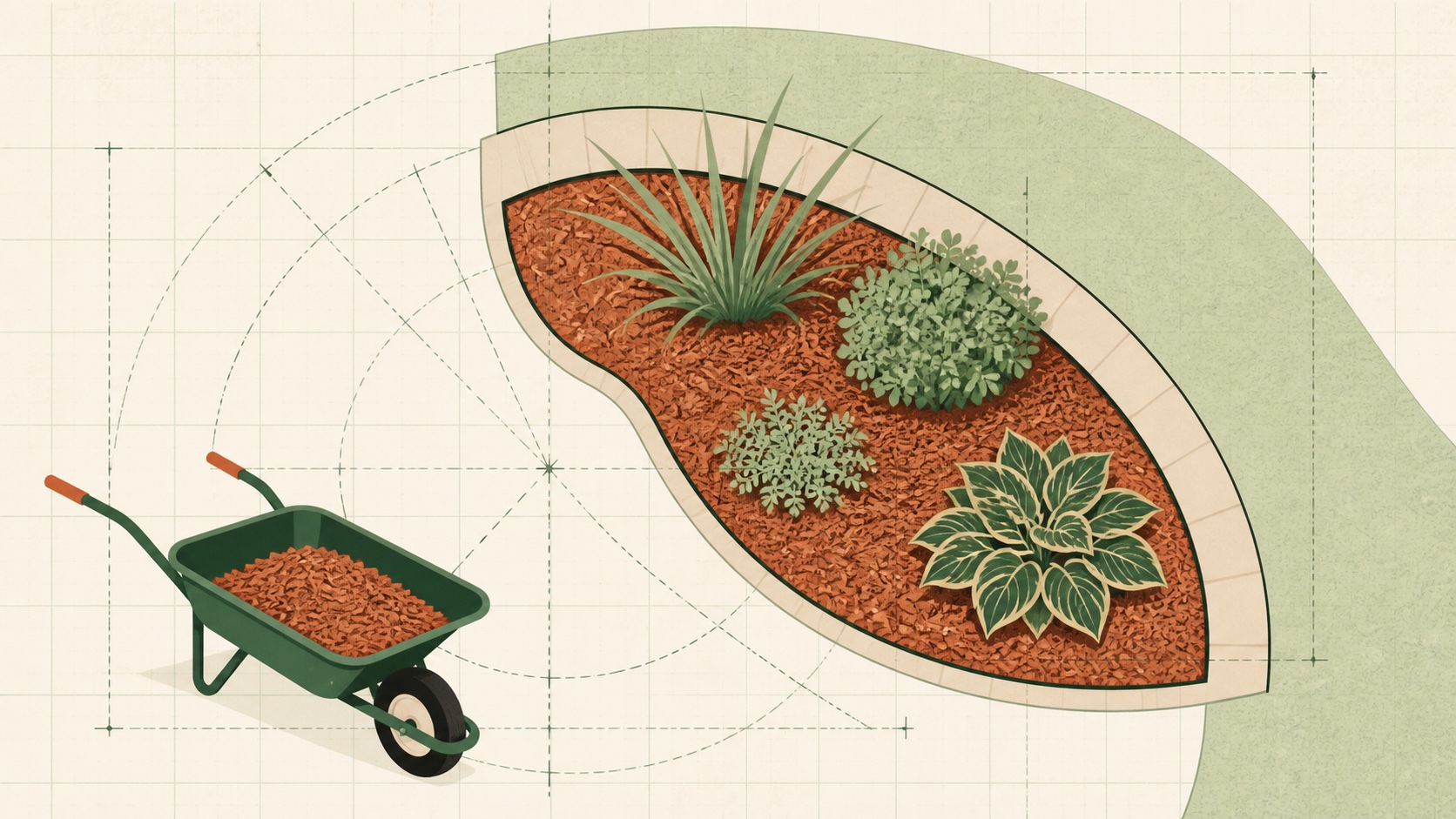
Most beds are not perfect rectangles. For a curved bed, use an average width measured at several points, or split the area into smaller rectangles and add the results. The tool also converts the final volume into common two-cubic-foot bags.
Existing mulch, plant crowns, and tree trunks affect how much new material belongs in the bed. Avoid piling mulch directly against stems or bark. Bulk mulch is normally sold by the cubic yard, while bag size varies, so check the printed bag volume before purchasing.
Complete planning guide
How to plan your mulch calculator estimate
Use the calculator for the arithmetic, then use this guide to check the measurements, assumptions, purchasing decisions, and field conditions behind the result.
Plan mulch depth without burying plants
A mulch calculator multiplies bed area by intended depth to estimate cubic feet, cubic yards, or bags. The depth should reflect the material and site rather than a habit applied everywhere. Coarse arborist chips, shredded bark, fine composted mulch, stone, and leaf mold settle and spread differently. Existing mulch counts toward total depth if it is still functional; repeatedly adding a full new layer can bury root flares, trap moisture against stems, and raise grades near structures.
Mulch quantity does not answer plant-health or drainage questions. Keep material away from trunks, crowns, siding, weep details, and places where project or manufacturer instructions require clearance. Supplier volume can also be approximate, especially for bulk organic material that settles in transit. Use the calculator as an ordering guide after mapping beds, checking current depth, and choosing a modest finished layer appropriate to the landscape.
Measure bed shapes and top-up depth
Sketch each bed. Rectangles use length times width; circles use pi times radius squared; triangles use one-half base times height. For a curved border, divide the bed into short approximate rectangles or measure it as a large shape and subtract lawn islands. Exclude sizable patios, boulders, ponds, and dense groundcover that will not be mulched. Small plant stems do not need deductions. Add all areas in square feet only after each shape has been measured in consistent units.
Probe existing mulch at several spots and decide the added depth, not merely the desired total depth. If a bed already averages 1.5 inches and the target is 3 inches, calculate a 1.5-inch top-up. Convert inches to feet by dividing by 12. Multiply square feet by depth in feet for cubic feet, then divide by 27 for cubic yards. For bags, divide required cubic feet by the labeled bag volume, remembering that bags may be marked 1.5, 2, or 3 cubic feet.
Worked example: mixed foundation beds
Suppose two rectangular beds measure 28 by 4 feet and 18 by 6 feet, while a semicircular bed has a 10-foot diameter. The rectangles total 220 square feet. A full 5-foot-radius circle is about 78.5 square feet, so the semicircle adds 39.25. Excluding a 3-by-5-foot utility pad leaves approximately 244.25 square feet to cover.
The beds already hold a thin, uneven layer, and probing supports adding an average of 2 inches. Two inches is 0.167 foot, so the added volume is about 40.8 cubic feet, or 1.51 cubic yards. With 10 percent for settlement and contour variation, the order becomes 1.66 cubic yards, practically 1.75 or 2 cubic yards according to supplier increments. If using 2-cubic-foot bags, 40.8 times 1.10 divided by 2 gives 22.4, so 23 bags are required. Bulk and bag rounding will not produce identical surplus.
Choose bulk or bags deliberately
Bulk mulch is efficient for larger accessible beds, but confirm the seller's yard increment, delivery charge, product consistency, and safe dump location. Bags keep colors and volume more predictable and can be carried through tight access. Compare on total delivered cubic feet rather than bag count or headline price. Dyed products can vary between production runs, so acquire enough at once for visible connected beds.
Organic mulch settles, making a modest allowance reasonable, but the answer is not to mound it deeply. Plan edging cleanup and spreading access before delivery. Keep a small amount for later thin spots if it can be stored dry and unobtrusively. Weed barrier, newspaper, or herbicide should not be assumed from the mulch quantity; decide any underlying treatment based on the planting plan and product guidance.
Common mulch-estimating mistakes
- Ordering from lot size rather than measured bed area covers lawn, paving, and buildings that receive no mulch. Map only the actual beds.
- Calculating full target depth when usable mulch remains leads to overapplication. Measure the existing layer and estimate the additional depth needed.
- Converting a 3-inch layer to 0.3 foot overstates volume. Three inches is one-quarter foot, or 0.25 foot.
- Treating every bag as the same size causes an immediate shortage or surplus. Divide by the cubic-foot volume printed on the chosen product.
- Spreading the computed depth against trunks and siding ignores necessary clearances. Pull material back at sensitive edges even though those narrow zones remain in the ordering allowance.
Verify beds and finished depth
Walk the bed map and confirm every outer boundary, island, hardscape deduction, and curved approximation. Probe existing material in several representative areas. Recalculate net square feet, convert only the added inches to feet, and derive cubic feet before converting to yards or bags. Apply one modest allowance for settling and irregular grade, then round to the seller's actual unit.
Before delivery, verify material, color, unit size, access, pile location, and forecast. Mark target depth with a small gauge and spread evenly rather than emptying an assumed number of bags into each bed. Finish by exposing root flares and checking clearances around stems, walls, drains, and utility features. The remaining material should be a small intentional reserve, not evidence that bed depth was guessed.
Reproducible validation
How we tested this calculator
6/6 matched
Each row compares an independently stated expected result with the output returned by the published calculation engine. These are computational checks, not claims about material consumed in a field project.
| Case | Test inputs | Expected | Actual | Result |
|---|---|---|---|---|
| M-2IN | 24 × 6 ft bed; 2 in depth; 5% reserve | 0.93 cubic yards | 0.93 cubic yards | Match |
| M-3IN | 24 × 6 ft bed; 3 in depth; 5% reserve | 1.4 cubic yards | 1.4 cubic yards | Match |
| M-4IN | 24 × 6 ft bed; 4 in depth; 5% reserve | 1.87 cubic yards | 1.87 cubic yards | Match |
| M-SMALL | 12 × 4 ft bed; 3 in depth; 10% reserve | 0.49 cubic yards | 0.49 cubic yards | Match |
| W-MU0 | 24 × 6 ft × 3 in bed; 0% | 1.33 cubic yards | 1.33 cubic yards | Match |
| W-MU5 | 24 × 6 ft × 3 in bed; 5% | 1.4 cubic yards | 1.4 cubic yards | Match |
Reference check
Sources and assumptions
Formula and assumptions reviewed by Alex Carter.
Mulch volume is calculated from bed area and the chosen installed depth. The result does not account for an uneven grade, settling, existing mulch, or supplier packaging; confirm the desired depth for the material and plantings, then convert the volume using the bag or bulk supplier's stated quantity.
These references inform the method. The selected product label, supplier quantities, site conditions, and locally adopted requirements take precedence.
Before you buy
- 01
Measure bed width at several points and use the average.
- 02
Subtract areas occupied by large rocks or dense groundcover.
- 03
Keep mulch away from siding, trunks, and plant crowns.
Common questions
Mulch Calculator FAQ
How many two-cubic-foot bags make a cubic yard?+
There are 27 cubic feet in a cubic yard, so 13.5 two-cubic-foot bags equal one cubic yard before rounding.
Does old mulch count toward depth?+
Yes. Measure the remaining layer and add only enough new mulch to reach the target depth.