
The calculation explained
Bead geometry controls yield
Length is converted to inches and multiplied by joint width and depth to find cubic inches of sealant. Cartridge fluid ounces are converted to approximate cubic inches before the waste allowance is applied. The result is rounded up to complete cartridges.
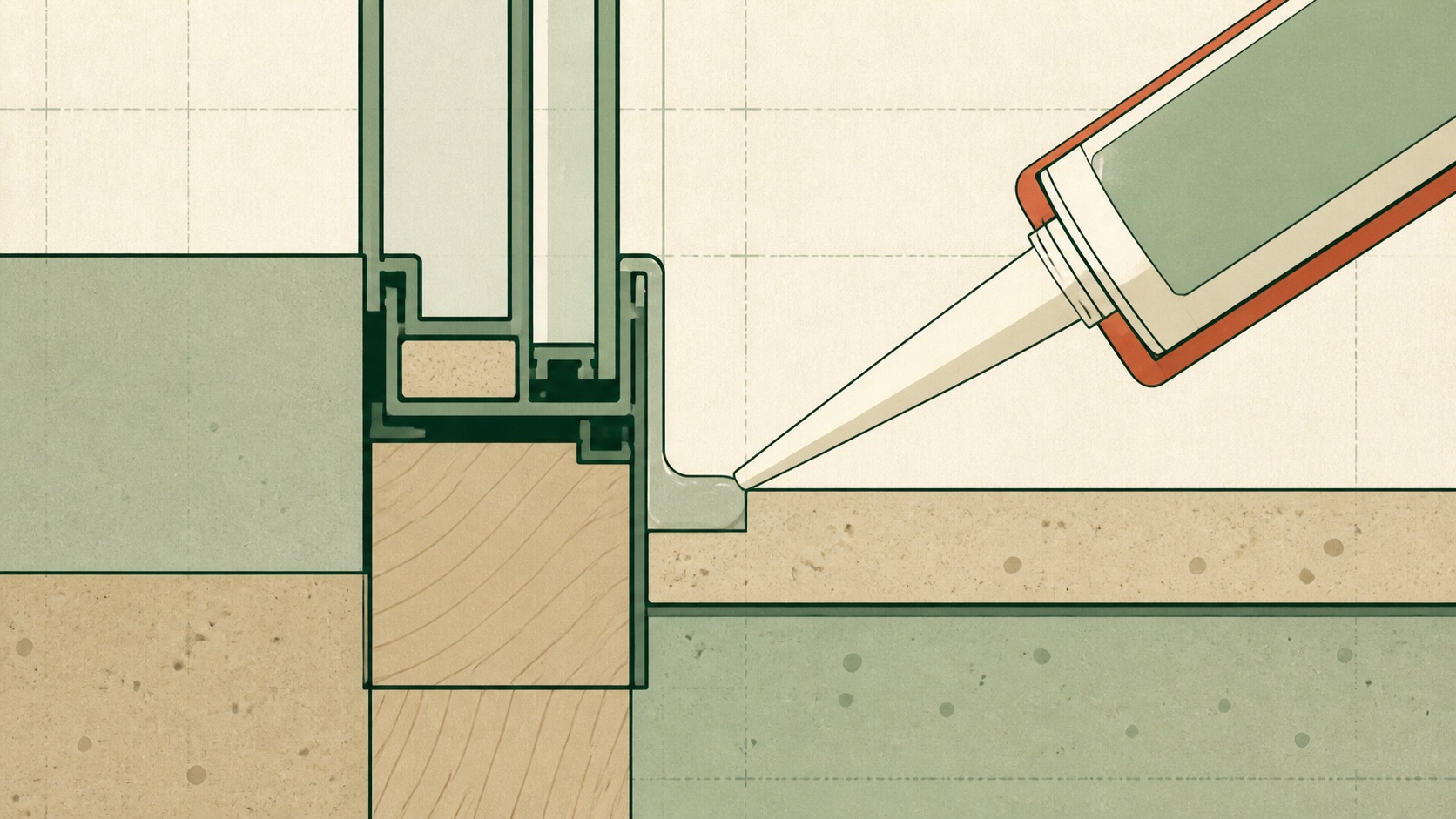
Many moving joints require backer rod and a specific width-to-depth profile rather than a fully filled cavity. Product compatibility, adhesion, tooling, temperature, and cure conditions also affect performance. Follow the sealant manufacturer’s joint-design and preparation instructions.
Complete planning guide
How to plan your caulk calculator estimate
Use the calculator for the arithmetic, then use this guide to check the measurements, assumptions, purchasing decisions, and field conditions behind the result.
Estimate sealant from joint volume
A caulk calculator converts joint length, width, and depth into sealant volume, then divides by cartridge or sausage yield. Linear feet alone are insufficient: doubling joint width or depth doubles material, and irregular gaps may consume far more than a neat bead. Tooling loss, nozzle priming, discarded material, and partially filled joints also justify a modest allowance.
Quantity does not determine sealant suitability or joint design. Movement capability, substrate, exposure, paintability, immersion, temperature, primer, adhesion, and cure conditions vary by product. Some joints require backer rod or bond-breaker tape to control depth and avoid three-sided adhesion. Follow current manufacturer instructions and the designed joint geometry, especially for exterior, glazing, firestop, sanitary, or movement applications.
Measure each joint family
Walk the work and group joints by approximate width and required sealant depth. Measure length with a tape, including corners and short returns, but exclude intentional drainage openings. Check width at intervals because a single narrow reading can hide a broad gap elsewhere. Use the design or product guidance for depth; do not assume the visible gap should be filled solid to the back. Measure in inches when calculating volume, converting linear feet to inches by multiplying by 12.
For a rectangular cross-section, cubic inches equal length in inches times width times depth. A tooled concave bead may use somewhat less, so the product's coverage chart is often the preferred source. For a simple surface bead with no defined depth, make a short test bead, measure how many feet one cartridge produces, and use that observed rate. Convert cartridge fluid ounces to volume only with correct units; a nominal 10.1-fluid-ounce cartridge contains about 18.2 cubic inches before gun and nozzle loss.
Worked example: window perimeter joints
Suppose exterior window joints total 180 linear feet after all sides and returns are measured. The prepared joints average 1/4 inch wide, and product guidance for the backer-rod-supported profile calls for approximately 1/4 inch sealant depth. Convert 180 feet to 2,160 inches. Multiplying 2,160 by 0.25 by 0.25 gives 135 cubic inches of theoretical sealant.
A 10.1-fluid-ounce cartridge contains roughly 18.2 cubic inches, so theoretical demand is 135 divided by 18.2, or 7.42 cartridges. Adding 15 percent for variable width, nozzle residue, and tooling gives 8.53, rounded to nine cartridges. If field checks reveal several 1/2-inch-wide sections, calculate those lengths as a separate joint group rather than increasing every joint to the widest condition. Backer rod is ordered by total prepared length plus splice and handling allowance, in a diameter suited to the actual joint.
Match product, package, and working time
Confirm product chemistry, color, package volume, shelf life, lot, substrate compatibility, movement rating, primer needs, tooling method, and temperature limits. Cartridges suit intermittent small work, while sausages or pails can reduce packaging on large projects if compatible guns and crew capacity are available. Compare usable volume and expected waste, not package count alone.
Buy backer rod, bond-breaker tape, primer, cleaner, masking, nozzles, and tooling materials as separate items. Backer rod diameter must provide the compression recommended for the joint without being punctured. Do not buy so much sealant that it expires before use, and protect packages from storage conditions prohibited by the manufacturer. Retain batch information for visible color matching and later maintenance.
Common caulk-estimating mistakes
- Estimating only from linear feet assumes every gap has the same cross-section. Measure width and intended depth for each joint family.
- Filling deep cavities entirely with sealant wastes product and can create poor joint geometry. Use suitable backing where the design calls for it.
- Treating fluid ounces as cubic inches without conversion understates cartridge volume. Use labeled coverage or a correct volume conversion.
- Choosing the widest observed gap for the full project creates excess. Separate isolated wide joints and calculate their additional volume directly.
- Ignoring opened-package working time assumes every cartridge can be fully used. Sequence work and package sizes around realistic application pace.
Verify prepared joints and product yield
Rewalk every elevation or room and reconcile joint lengths with the takeoff. Probe representative widths and backing depths after preparation, then recalculate each joint family in one unit system. Divide by the exact package yield or verified test-bead coverage, apply one transparent waste factor, and round to full packages.
Before opening material, confirm substrate preparation, backing, primer, weather, cure window, color, lot, and current instructions. Check that the product is appropriate for the actual movement and exposure. The final order should cover measured joint volume with manageable application loss, while backing and accessory quantities support the joint profile used in the calculation.
Reproducible validation
How we tested this calculator
8/8 matched
Each row compares an independently stated expected result with the output returned by the published calculation engine. These are computational checks, not claims about material consumed in a field project.
| Case | Test inputs | Expected | Actual | Result |
|---|---|---|---|---|
| CK-025 | 180 ft; 0.25 × 0.25 in joint; 10.1 fl oz; 10% waste | 9 tubes | 9 tubes | Match |
| CK-WIDE | 180 ft; 0.375 × 0.25 in joint; 10.1 fl oz; 10% waste | 13 tubes | 13 tubes | Match |
| CK-BOTH | 180 ft; 0.375 × 0.375 in joint; 10.1 fl oz; 10% waste | 19 tubes | 19 tubes | Match |
| CK-HALF | 180 ft; 0.5 × 0.25 in joint; 10.1 fl oz; 10% waste | 17 tubes | 17 tubes | Match |
| W-CK0 | 180 ft; .25 × .25 in; 10.1 fl oz; 0% | 8 tubes | 8 tubes | Match |
| W-CK10 | Same joint; 10% | 9 tubes | 9 tubes | Match |
| R-CK-A | 194.4 ft; .25 × .25 in; 10.1 fl oz | 8 tubes | 8 tubes | Match |
| R-CK-B | 194.5 ft; .25 × .25 in; 10.1 fl oz | 9 tubes | 9 tubes | Match |
Reference check
Sources and assumptions
Formula and assumptions reviewed by Alex Carter.
Cartridge count is joint volume divided by the usable cartridge volume entered, plus waste. Joint width and depth must be measured consistently; tooling loss, irregular joints, backer rod, movement requirements, cure conditions, and product-specific joint geometry or yield tables can change consumption.
These references inform the method. The selected product label, supplier quantities, site conditions, and locally adopted requirements take precedence.
Before you buy
- 01
Measure several joints and use a realistic average width.
- 02
Use backer rod where the specified joint design calls for it.
- 03
Check product shelf life before storing surplus cartridges.
Common questions
Caulk Calculator FAQ
Why does a wider joint use so much more?+
Sealant volume is width multiplied by depth multiplied by length, so changes in both cross-section dimensions compound.
Does the calculator support triangular beads?+
It assumes a rectangular cross-section. A surface fillet may use less, but actual tooling and waste make field yield variable.