
The calculation explained
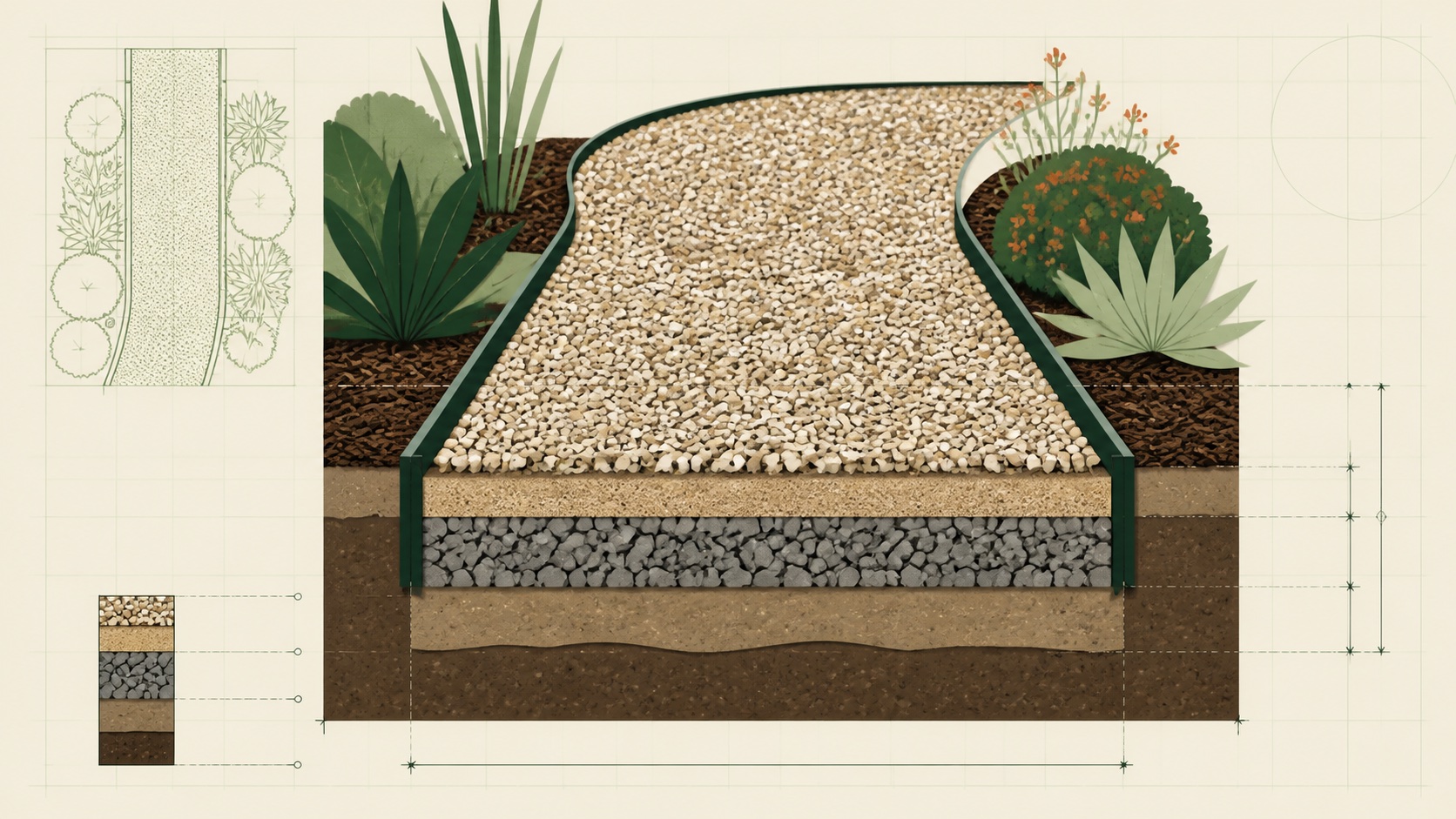
Loose delivery versus compacted depth
The dimensions describe the finished compacted layer. Volume is converted to cubic yards, increased by the reserve, and multiplied by density. Stone type, size distribution, moisture, and source can all shift the actual weight of one cubic yard.
A loose truckload settles as it is spread and compacted. Deep bases are often installed in lifts rather than all at once. Ask the supplier whether its coverage chart refers to loose or compacted material and whether orders are rounded to a half-ton or full-ton increment.
Complete planning guide
How to plan your gravel calculator estimate
Use the calculator for the arithmetic, then use this guide to check the measurements, assumptions, purchasing decisions, and field conditions behind the result.
Estimate compacted gravel by volume and weight
Gravel projects are measured as a finished layer but purchased by volume or weight. A driveway base, drainage trench, decorative bed, and leveling layer may use different gradations and target depths, so each belongs in a separate calculation. The calculator converts area times depth into cubic yards and can estimate tons when a supplier density is supplied. Density varies with stone type, gradation, moisture, and compaction; a generic tons-per-yard factor is only a preliminary assumption.
Distinguish loose delivery volume from compacted finished volume. Dense-graded base settles under compaction, whereas washed decorative stone behaves differently and should not be expected to lock together. Quantity planning cannot determine whether a stone is appropriate for drainage, bearing, or erosion control. Follow the project design, supplier guidance, and local conditions for material selection, layer thickness, separation fabric, slope, and compaction.
Measure the footprint and average depth
Sketch the footprint and divide it into rectangles, circles, or triangles. Multiply rectangle length by width; use pi times radius squared for circles and one-half base times height for triangles. Add the areas, then multiply by depth in feet. Three inches is 0.25 foot and six inches is 0.5 foot. Divide cubic feet by 27 to obtain cubic yards. For a trench, use average width times average depth times length, separating pipe displacement only when it is large and well defined.
Take depth readings at a grid of points after excavation. Averaging high and low readings is more credible than using the planned depth at one edge. On a tapered layer, average the starting and ending depths when the taper is regular. If several compacted lifts are required, calculate their combined finished depth and use an appropriate compaction factor or supplier conversion. For tonnage, multiply cubic yards by the current supplier's tons-per-cubic-yard value for the exact product rather than a broad gravel average.
Worked example: driveway surface layer
Suppose a driveway is 52 feet long and averages 11 feet wide, with a 6-by-8-foot parking flare added at one side. The main area is 572 square feet and the flare adds 48, for 620 square feet. A 3-inch compacted layer requires 620 times 0.25, or 155 cubic feet. Dividing by 27 gives 5.74 cubic yards of finished stone before compaction and placement allowance.
If the supplier recommends ordering 12 percent above compacted volume for this specific crushed product and method, multiply 5.74 by 1.12 to obtain 6.43 cubic yards. The same supplier quotes 1.45 tons per cubic yard at current moisture, so the weight estimate is about 9.32 tons. An order may be rounded to 9.5 or 10 tons depending on scale increments and truck capacity. Confirm whether quoted tonnage represents delivered loose material and whether a second load is preferable to overloading site access.
Order the correct gradation and delivery size
Ask for the product by the supplier's exact name and gradation. Similar labels can describe rounded drainage stone, crushed angular base, or mixes with fines, and their uses and densities differ. Obtain the supplier's current conversion between cubic yards and tons, then state which unit controls the sale. Confirm minimum load, delivery charge, allowable truck weight, and whether site entrances, overhead lines, slopes, and turning space can accept the proposed vehicle.
Plan where each load will be dumped. A pile placed beyond equipment reach creates extra handling and can contaminate clean stone with soil. For layered work, keep base, bedding, and decorative stone separated and recalculate each depth. Geotextile, edging, pipe, and compaction equipment follow their own measurements. Reserve a modest amount for low spots and future dressing, but do not hide an uncertain excavation behind an oversized order.
Common gravel-estimating mistakes
- Using inches as decimal feet greatly overstates volume. Convert a 4-inch layer to 0.333 foot before multiplying by square footage.
- Treating cubic yards and tons as fixed equivalents ignores material density and moisture. Obtain a conversion for the exact product from the selling supplier.
- Measuring only the centerline width misses flares, curves, and widened parking areas. Break those features into added shapes on the sketch.
- Ordering finished compacted volume as loose material without adjustment can leave the layer thin. Use supplier or project data for the anticipated compaction and handling loss.
- Combining different stone layers into one total can result in the right tonnage of the wrong material. Keep every gradation and function on its own line.
Verify excavation and delivery assumptions
After excavation, remeasure footprint boundaries and depth at enough locations to represent the whole layer. Recalculate area, convert depth to feet, obtain cubic yards, and document whether that volume is finished or loose. Apply the selected compaction or placement allowance once. If buying by weight, convert with the exact supplier figure and round to the supplier's scale and truck increments.
Before dispatch, verify product name, quantity unit, truck size, delivery path, dump location, weather, and equipment readiness. Check that slopes and drainage paths remain as intended after the layer is placed. The final estimate should connect surveyed field dimensions to one named material and one stated density, making it easy to adjust if excavation or supplier data changes.
Reproducible validation
How we tested this calculator
4/4 matched
Each row compares an independently stated expected result with the output returned by the published calculation engine. These are computational checks, not claims about material consumed in a field project.
| Case | Test inputs | Expected | Actual | Result |
|---|---|---|---|---|
| G-120 | 40 × 10 ft; 3 in; 1.2 tons/yd³; 8% reserve | 4.8 tons | 4.8 tons | Match |
| G-140 | 40 × 10 ft; 3 in; 1.4 tons/yd³; 8% reserve | 5.6 tons | 5.6 tons | Match |
| G-160 | 40 × 10 ft; 3 in; 1.6 tons/yd³; 8% reserve | 6.4 tons | 6.4 tons | Match |
| G-4IN | 40 × 10 ft; 4 in; 1.4 tons/yd³; 8% reserve | 7.47 tons | 7.47 tons | Match |
Full reports and datasets
Reference check
Sources and assumptions
Formula and assumptions reviewed by Alex Carter.
The calculator converts geometric volume to weight using the density entered, then applies a reserve. Aggregate density varies with rock type, gradation, moisture, and compaction, so the supplier's current tons-per-cubic-yard figure should replace any generic default.
- U.S. Geological SurveyAggregates statistics and information
- U.S. Geological SurveyCrushed stone statistics and information
These references inform the method. The selected product label, supplier quantities, site conditions, and locally adopted requirements take precedence.
Before you buy
- 01
Use the supplier’s density instead of the default when available.
- 02
Measure irregular areas as several rectangles.
- 03
Plan access and axle capacity before scheduling a delivery.
Common questions
Gravel Calculator FAQ
Why can delivered weight differ?+
Moisture, rock type, gradation, and loading practices change bulk density. The calculator is a planning estimate.
Should I enter loose or compacted depth?+
Enter the desired compacted finished depth, then use a reserve or supplier factor to account for compaction.